

Introduction: The New Landscape of British Dating
Dating in modern Britain has never offered more options, or felt more overwhelming. With millions of profiles across mainstream platforms, finding someone who genuinely understands your worldview can feel like searching for a needle in a haystack. For many singles, the question is no longer just “Do we have chemistry?” but “Do we share the values that matter most to us?”
This is where political affinity dating has emerged as a compelling alternative. A new wave of UK focused platforms are offering singles a different proposition: rather than casting the widest possible net and hoping for the best, why not start with a foundation of shared outlook and build from there?
The data suggests this approach resonates with a significant portion of British singles. According to recent Ipsos polling, 42% of Britons consider a potential partner’s political views important, rising to 50% among those under 35 and 55% among graduates. A third of Britons (32%) say they would find it difficult to date someone with fundamentally different political views, with women (36%) more likely to feel this way than men (28%).
These aren’t abstract statistics. They reflect a genuine shift in how people approach compatibility. As politics has become increasingly intertwined with personal identity, shaping everything from how we view family structures to our attitudes toward work, community, and national belonging, the search for a partner who “gets it” has taken on new urgency.
Why Political Affinity Matters in Modern Relationships
Values as the Foundation of Long Term Compatibility
The case for political affinity dating rests on a simple observation: the beliefs that shape our politics are rarely confined to the ballot box. They inform how we raise children, how we manage money, how we engage with our communities, and how we envision our futures. When these fundamental differences exist, they can create friction that erodes even the strongest connections over time.
Research from the British Psychological Society confirms this intuition. A comprehensive study involving more than 4,000 adults in romantic relationships found that political dissimilarity was linked to slightly lower relationship satisfaction, closeness, and day to day relationship quality, an effect that remained consistent even when accounting for overall similarity. Importantly, this effect was strongest when partners perceived each other as politically distant, suggesting that the feeling of difference matters as much as the difference itself.
Dr. Amie Gordon and her colleagues found that only 23% of people were in relationships with someone from a different political party, and just 8% were dating across major party lines. This isn’t accidental. It reflects both the natural human tendency toward similarity, the preference for people like ourselves, and the growing recognition that shared values provide a crucial foundation for navigating life’s challenges together.
The “Politics as Character” Phenomenon
There’s another dimension to this that deserves attention. For many people, political affiliation has become a shorthand for character and values. As one observer noted, political identity increasingly signals “who one is not” as much as who one is, with negative partisanship, the rejection of the opposing side’s values and worldview, playing a powerful role in shaping social preferences.
This dynamic is particularly pronounced among younger Britons. The Ipsos data showing that half of under 35s consider political views important suggests that for younger generations, who have come of age in a politically charged era, political compatibility has become a more significant factor in partner selection than it was for their parents or grandparents.
The practical implications are clear: for many singles, discovering that a potential partner holds fundamentally different political views isn’t just a matter of disagreeing about policy. It can feel like a fundamental incompatibility in values, judgment, and worldview.
The Rise of Political Niche Dating Platform
A Different Kind of Dating Site
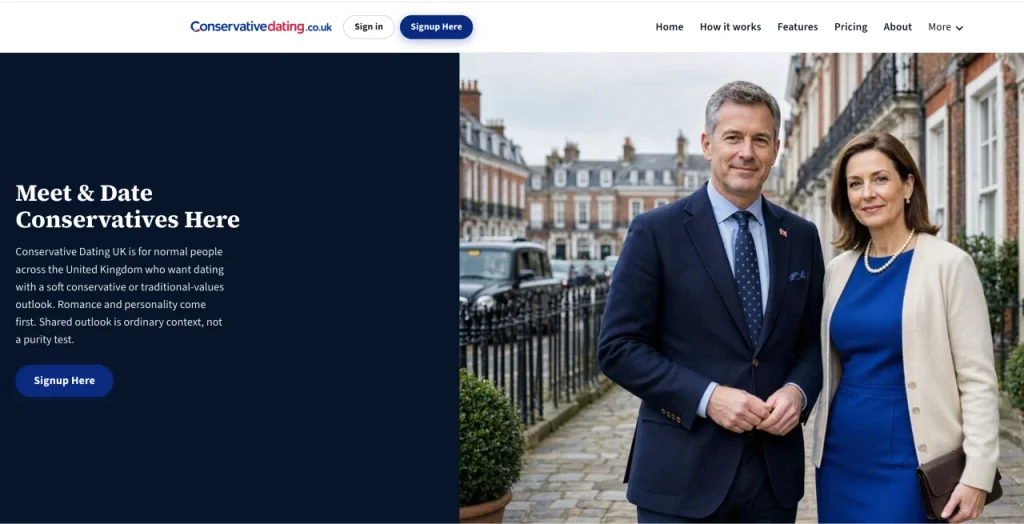
What distinguishes platforms like Conservative Dating UK from mainstream alternatives is their explicit acknowledgment that shared political outlook or values can provide a meaningful foundation for connection, while simultaneously insisting that romance and personality come first.
Each of these platforms is remarkably consistent in its messaging. They describe themselves as being for “normal people” who want dating with a “soft” affinity. Conservative Dating UK speaks of “soft conservative or traditional values,” a phrase that signals this is not a platform for political activists seeking ideological purity tests.
This language is deliberate and important across all the platforms. The phrase “Romance first. Politics as context” appears throughout, a clear statement that while shared values matter, they don’t replace kindness, humour, chemistry, and the countless other factors that make two people want to spend time together.
What These Sites Offer
The user experience across these platforms is straightforward and designed to facilitate genuine connection.
Profile creation encourages users to describe themselves authentically, with space for photos, biography, and a clear indication of what they’re looking for, whether that’s a serious relationship, friendship, or honest casual dating.
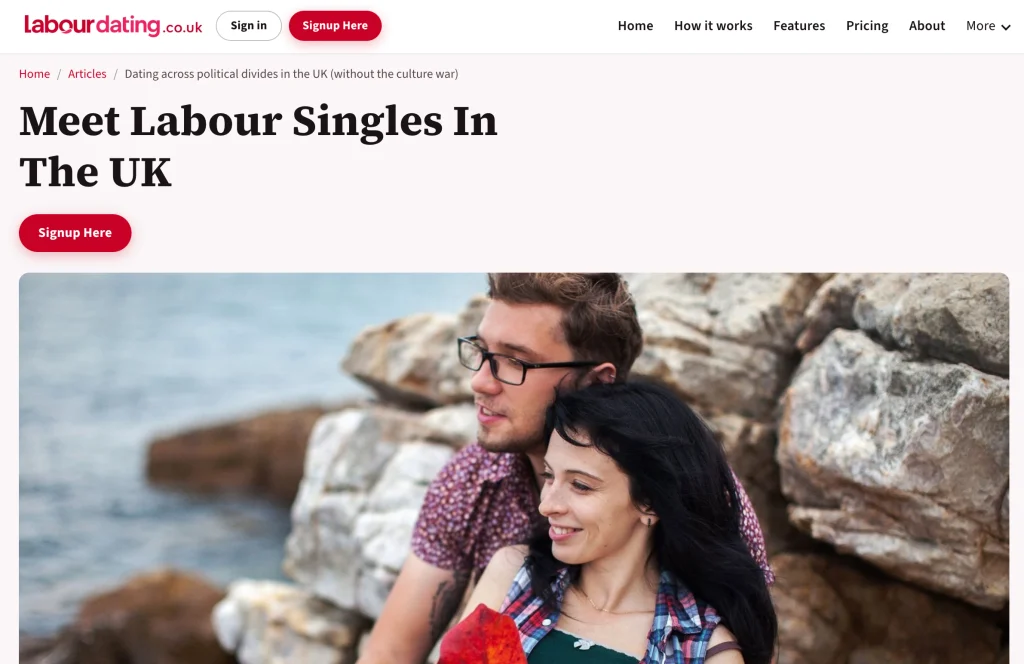
Browsing with intention allows users to read “looking for” lines and shortlist people within a realistic travel radius, prioritising compatibility over sheer volume. On Labour Dating UK, for example, members are encouraged to keep early conversations on site before planning a public meet when interest is mutual.
On site messaging keeps early conversations secure, and each platform maintains clear boundaries. None are officially endorsed by the political parties whose names they evoke, and all emphasise respectful, constructive conversation while drawing a firm line against hate and harassment.
The Evidence: Why Shared Values Work in Dating
Shared Values Are a Natural and Sensible Foundation
The tendency to prefer partners who share our political views isn’t a modern invention or a symptom of polarisation. It’s a manifestation of a universal human inclination to associate with people like ourselves. Research spanning decades has documented this pattern across race, education, income, religion, and countless other attributes.
What’s changed is the salience of politics as a marker of identity. When political views were less tightly correlated with lifestyle, consumption patterns, and social attitudes, they mattered less in partner selection. Today, politics often serves as a proxy for a broader cluster of values and behaviours, making it a more useful signal of compatibility.
Academic research supports the rationality of this approach. A conjoint analysis study using a simulated dating site with 3,000 UK participants found that people were 18.2% more likely to choose partners who shared their political views, a factor comparable to physical attractiveness and twice as significant as education level.
The Cost of Political Mismatch
For those who do find themselves in politically mixed relationships, the research offers both caution and hope. The British Psychological Society study found that political differences were associated with slightly lower relationship quality, but that certain habits could buffer against these effects: appreciation, perspective taking, similar lifestyles, and not placing excessive importance on politics.
However, the study also found that perceiving a partner as politically distant was linked to lower quality even when everything else was going well. This suggests that political compatibility isn’t just about avoiding conflict. It’s about feeling deeply known and understood by your partner.
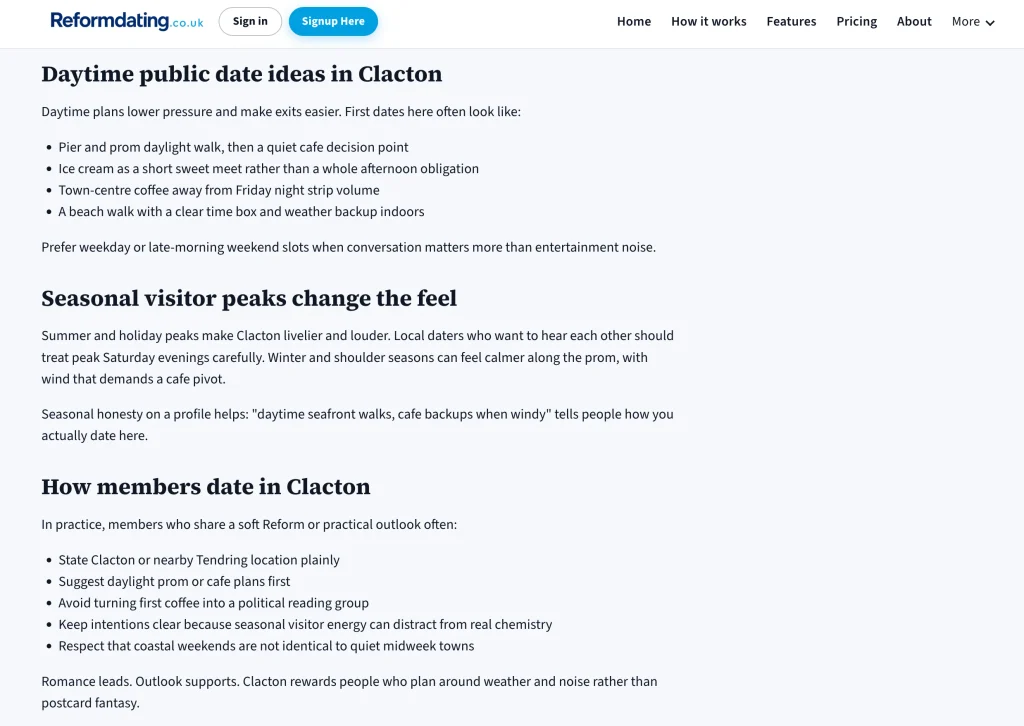
For many singles, the conclusion is straightforward. Why invest time and emotional energy in relationships that begin with fundamental mismatch when platforms like Reform Dating UK exist to connect you with people who already share your foundational outlook?
The Practical Case: Efficiency, Authenticity, and Safety
Beyond Swipe Fatigue
Mainstream dating apps have revolutionised how people meet, but they’ve also created new problems. The endless swiping, the ghosting, the superficial interactions, the feeling that everyone is replaceable, these are real frustrations that have led many to seek alternatives.
Political affinity platforms offer a different model. By narrowing the pool to those who share a particular outlook, they increase the likelihood that any given match will have potential. This isn’t about limiting options. It’s about increasing relevance.
Consider the alternative: spending weeks or months getting to know someone, only to discover a fundamental incompatibility that could have been signalled from the start. For those for whom political values are genuinely important, the efficiency argument is compelling.
Authenticity and Honesty
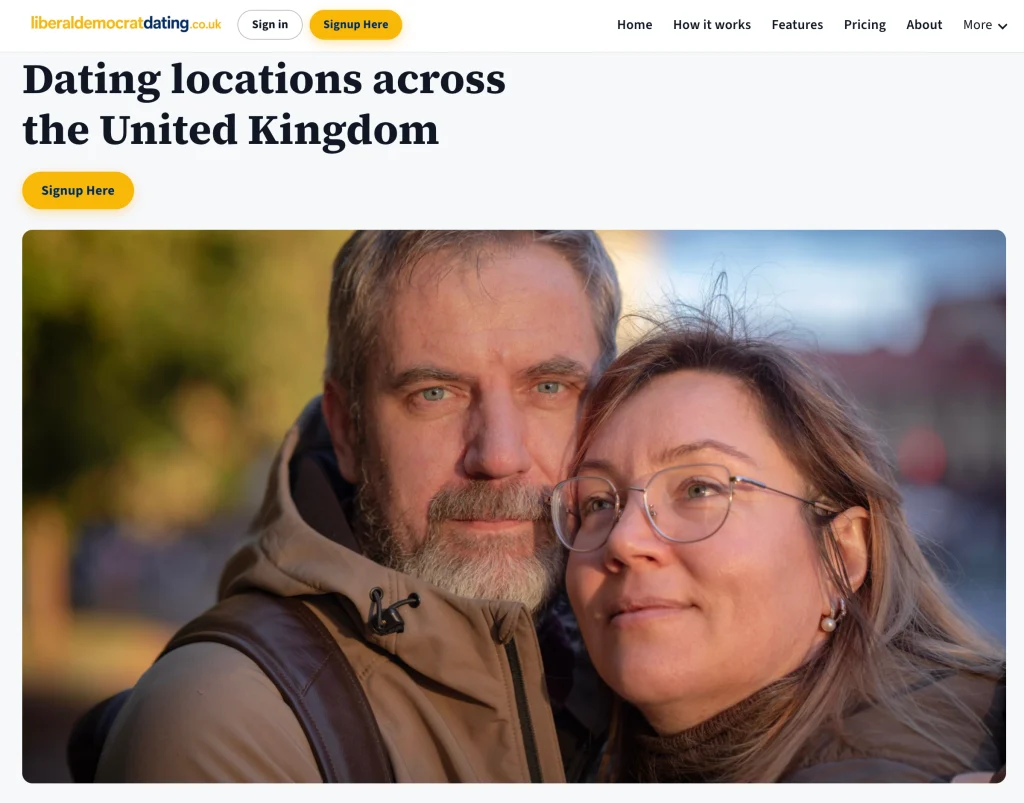
There’s also something to be said for the honesty these platforms encourage. On mainstream apps, where political affiliation is often buried or omitted, users may feel pressure to downplay their views to avoid limiting their options. Liberal Democrat Dating UK offers a space where that pressure disappears. You can be open about what matters to you without fear of automatic rejection.
This authenticity can carry over into the relationship itself. Couples who meet on value aligned platforms may find it easier to have honest conversations about important topics because they’ve never had to hide who they are.
Safety and Respect
Finally, it’s worth noting the safety considerations these platforms address. For people whose political views or values are central to their identity, whether that’s a Conservative who values tradition and stability, a Labour supporter committed to social justice, a Reform voter concerned about national sovereignty, or someone who prioritises faith and traditional values, being in spaces where those views are respected, rather than attacked or mocked, has real value.
Each of these platforms emphasises respectful, constructive conversation and explicitly prohibits harassment. For those who have grown weary of the toxicity that can characterise political discussion online, this is a significant draw.
Conclusion: Finding Love in a Politically Conscious Era
The rise of political affinity dating in the UK reflects something genuine about how people approach relationships today. Shared values matter. They provide a foundation for understanding, a basis for trust, and a common language for navigating life’s challenges together.
This doesn’t mean that political affinity is the only factor that matters, or even the most important one. Chemistry, kindness, humour, and countless other qualities remain essential. What these platforms offer is a starting point: a pool of potential partners who already share something fundamental, allowing the other elements of connection to develop on a more solid foundation.
For British singles who feel that their values are central to who they are, and who want to meet someone who understands that, platforms such as Restore Dating offer a compelling alternative to the scattershot approach of mainstream dating. They represent a recognition that in a world where politics and personal identity are increasingly intertwined, looking for love among those who share your outlook isn’t narrowing your options. It’s expanding the possibilities for genuine connection.
Whether you lean Conservative, Labour, Reform, Liberal Democrat, or find yourself drawn to a broader values aligned approach, there’s now a space where you can be open about what matters to you, and meet others who feel the same. In an era when trust and understanding can feel in short supply, that’s no small thing.
Visit DatingSiteReviews.co.uk to discover more UK Dating sites